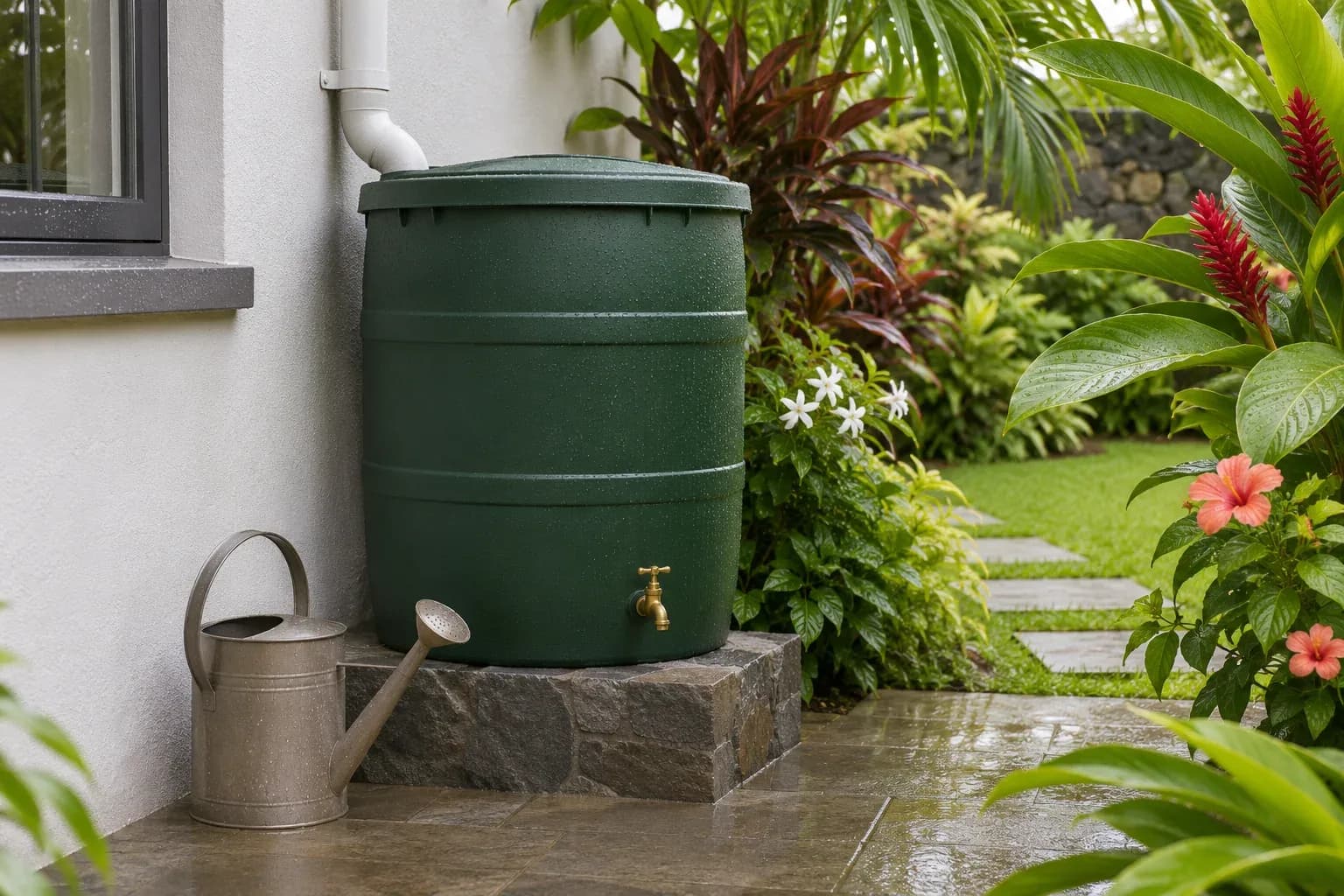
Rainwater harvesting in Mauritius begins with a modest possibility: keeping some roof runoff for the ornamental garden. The question is how the system will fit the house, the planting and the person who looks after them.
Mauritius’s Observatoire de l’Environnement encourages rainwater collection and describes non-potable uses in public harvesting systems. For a household, that offers a useful starting point. It does not establish the right tank size or guarantee that water will be waiting through a dry spell.
Give the water a clear job
Begin with the tasks you want the reserve to serve. Watering ornamental plants or washing garden items that are not used for food are useful starting points. The US Centers for Disease Control and Prevention recommends these as examples that limit the chance of swallowing collected rainwater.
Keep that purpose distinct from drinking, cooking, brushing teeth or watering edible crops. Water can pick up contamination from the roof and collection equipment even when it looks clear. A leaf screen is not proof that it is safe to drink.
A tank filled from the mains and a tank receiving roof runoff therefore need different conversations. Ask the installer to explain where each inlet and outlet goes. Rainwater must not be able to enter pipes carrying safe drinking water. Treating roof water for household consumption is a separate technical undertaking.
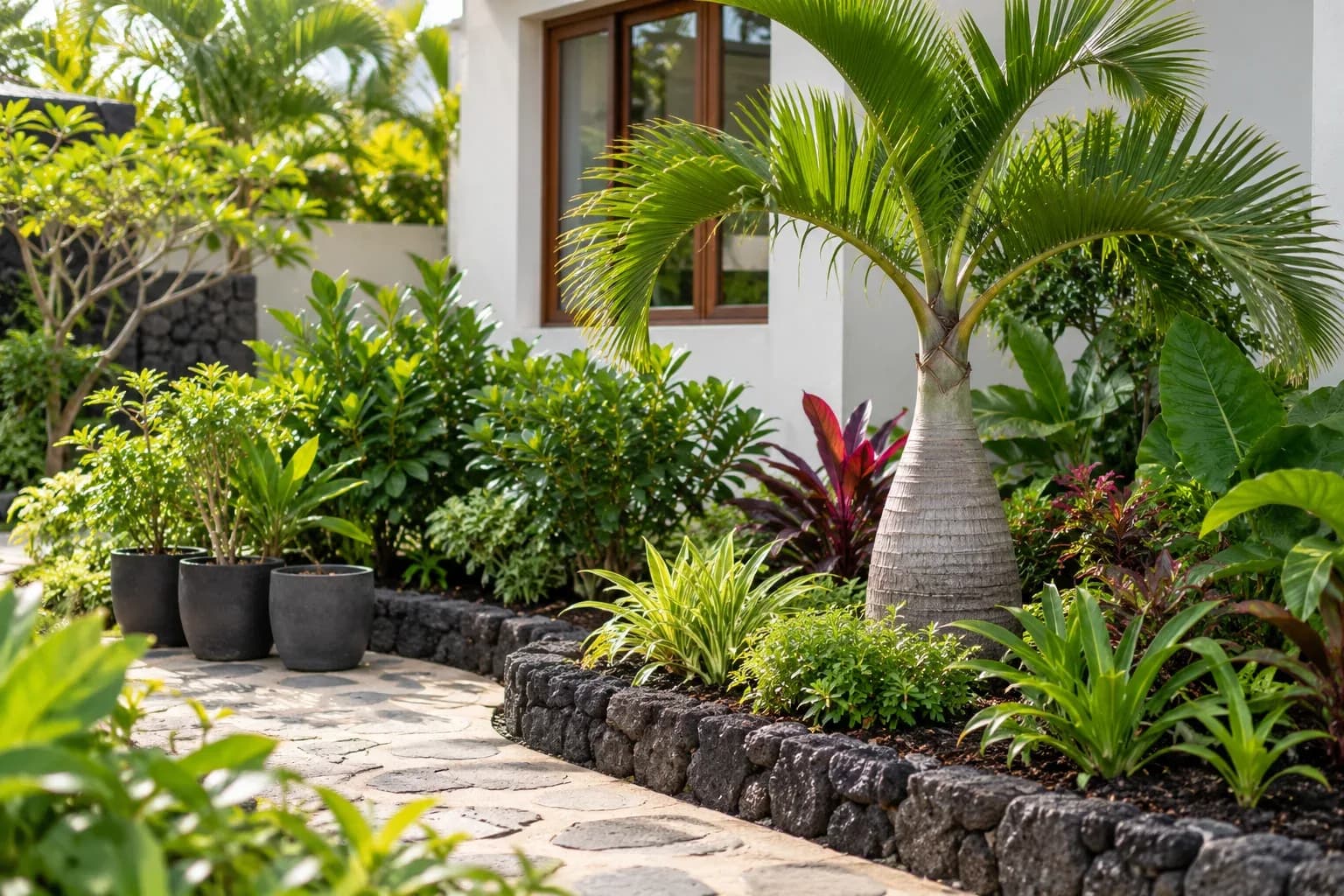
The garden itself still matters. Choosing plants for the garden starts with their suitability for the place. A collection tank should support that plan rather than become a reason to assume every planting scheme will have enough water.
Find a place for the whole system
Bring the installer a simple sketch or photographs showing the roof, downpipes, proposed tank position and garden. Mark where you would actually fill a watering can or use an outlet. These are practical notes for a conversation, not a substitute for a technical design.
The roof and its materials need assessment along with gutters, collection pipework and storage. Ask which parts are included in the proposal and which existing components need work. A quotation for a container alone does not explain the complete installation.
A full tank needs firm, level support, and overflowing water needs a route away from the foundations. These are basic arrangements described by Connecticut’s environmental department in its guidance on rain barrels. They bring the discussion back to the ground beside the house, not just the dimensions in a catalogue.
Leave the installer to determine suitable support and overflow arrangements for the property. Ask how the equipment can be reached for cleaning and repairs once planting has grown around it. In a rented home or shared building, discuss the proposed roof and space with the owner or manager before planning alterations.
Storage capacity describes available space, not the amount of rain already collected. Regional rainfall records need careful interpretation, too. Discuss expected use and opportunities to refill without turning a regional average into a promise for this particular roof.
Make upkeep part of the arrangement
Closed storage needs continuing attention. CDC guidance recommends tight covers and mosquito-excluding screens, together with cleaning and repair. Ask where debris is removed and how screens and connections can be inspected safely.
A first-flush diverter sends the early runoff away from storage because it can carry more contamination. It can improve collection quality; it does not turn the tank into a drinking-water system. Its design belongs in the installation discussion.
Before accepting the proposal, ask for the intended uses, collection route, outlet, overflow and maintenance needs to be described together. Agree who will look after the equipment during absences, and keep those instructions where the gardener or caretaker can find them.
Check current CWA restrictions before using water outdoors; do not assume a rainwater tank exempts a particular use. Keep a clear route to the equipment, too. The person cleaning a screen should not have to move a row of heavy planted pots to reach it.