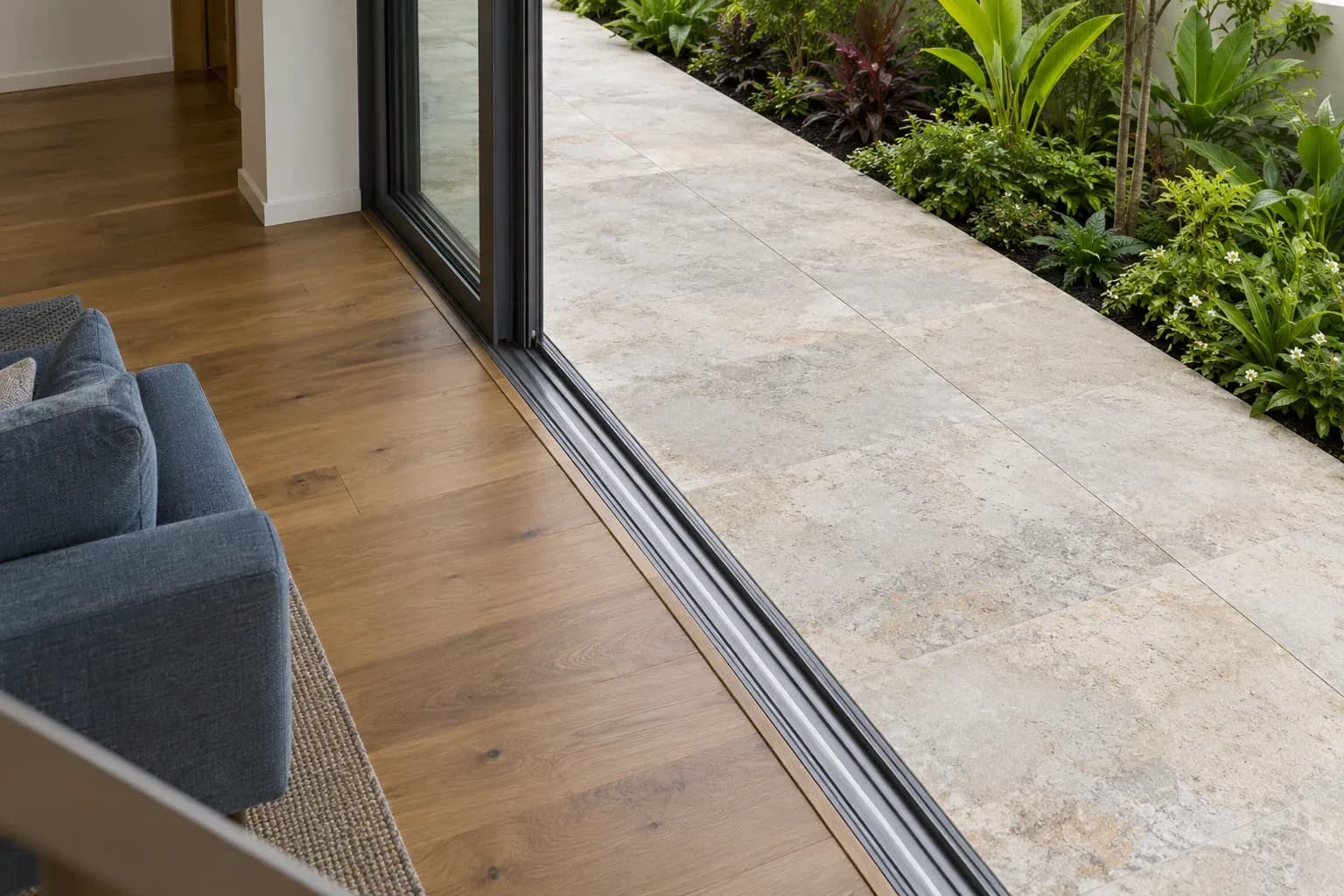
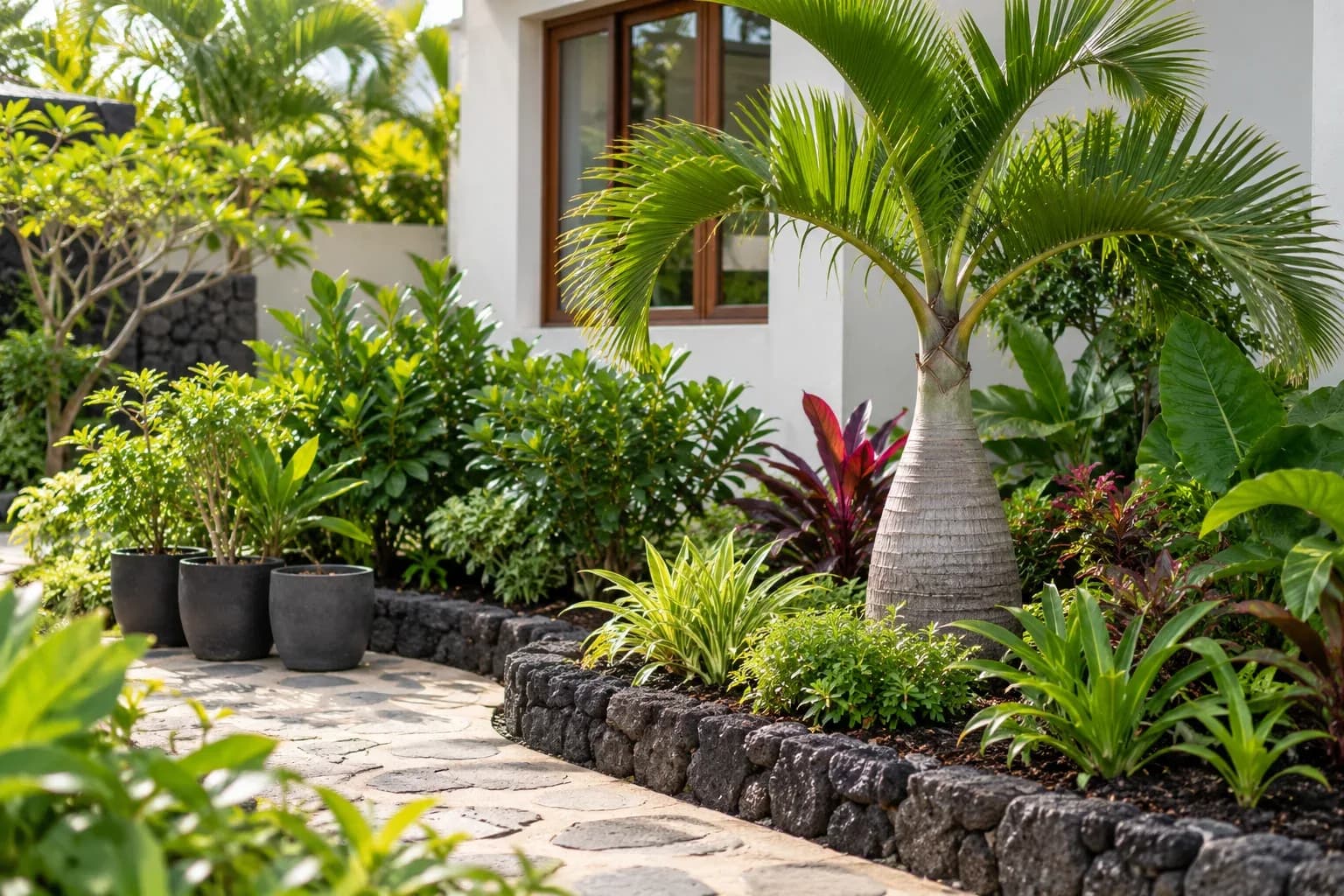
A palm beside the window, shrubs along a path: we often choose garden plants for their shape. In Mauritius, it is worth asking their names too. Local nurseries sell species native to the island. Those plants can give a home garden a clear link to the place where it grows.
This can begin with a gap in a border or an entrance that needs planting. There is no need to dig up the whole garden. The choice of plant and the space it needs are best considered together.
Where the bottle palm comes from
The name bottle palm is easy to remember. Its botanical name, Hyophorbe lagenicaulis, tells the nursery which species you mean. Kew records its native range as Mauritius. The European and Mediterranean Plant Protection Organization also records that it is grown as an ornamental across the tropics.
You may therefore know a Mauritian native plant from a garden in another country. A tropical shape alone does not tell you where a species comes from. The name offers a firmer starting point than leaves that look alike.
Ebony Forest's nursery catalogue also includes black ebony, Diospyros tessellaria. Kew gives Mauritius as its native range too. These are two species to learn about, not a pair to plant in every garden. Knowing their names helps make the choice more precise.
Room beside the window
The plant at the nursery still fits in its pot. At home, it will grow beside a window, a path or other plants. Ask how large it will become and how much room it needs. A good fit on the day you buy it may not be enough.
Ebony Forest sells trees, shrubs, palms, climbers and ground covers. It also offers advice for the region and the kind of garden you want. A plant might line a path, frame a window or fill a lower part of an existing border. These are ideas to discuss with the nursery, not care instructions for a named species.
Take photographs and describe the spot you want to plant. A native species still needs a suitable place. The space and conditions in your garden matter.
What the nursery can supply
Ebony Forest says it sells surplus plants and species it can propagate sustainably. It keeps some rare or highly threatened plants for forest restoration. Stock changes with the seasons; a name in the catalogue does not mean the plant is always on sale.
Keep an open mind about alternatives for a private garden. A different plant suggested by the nursery may fit the space better. Keep its botanical name and the advice you receive. They will help when you talk to the person who looks after the garden.