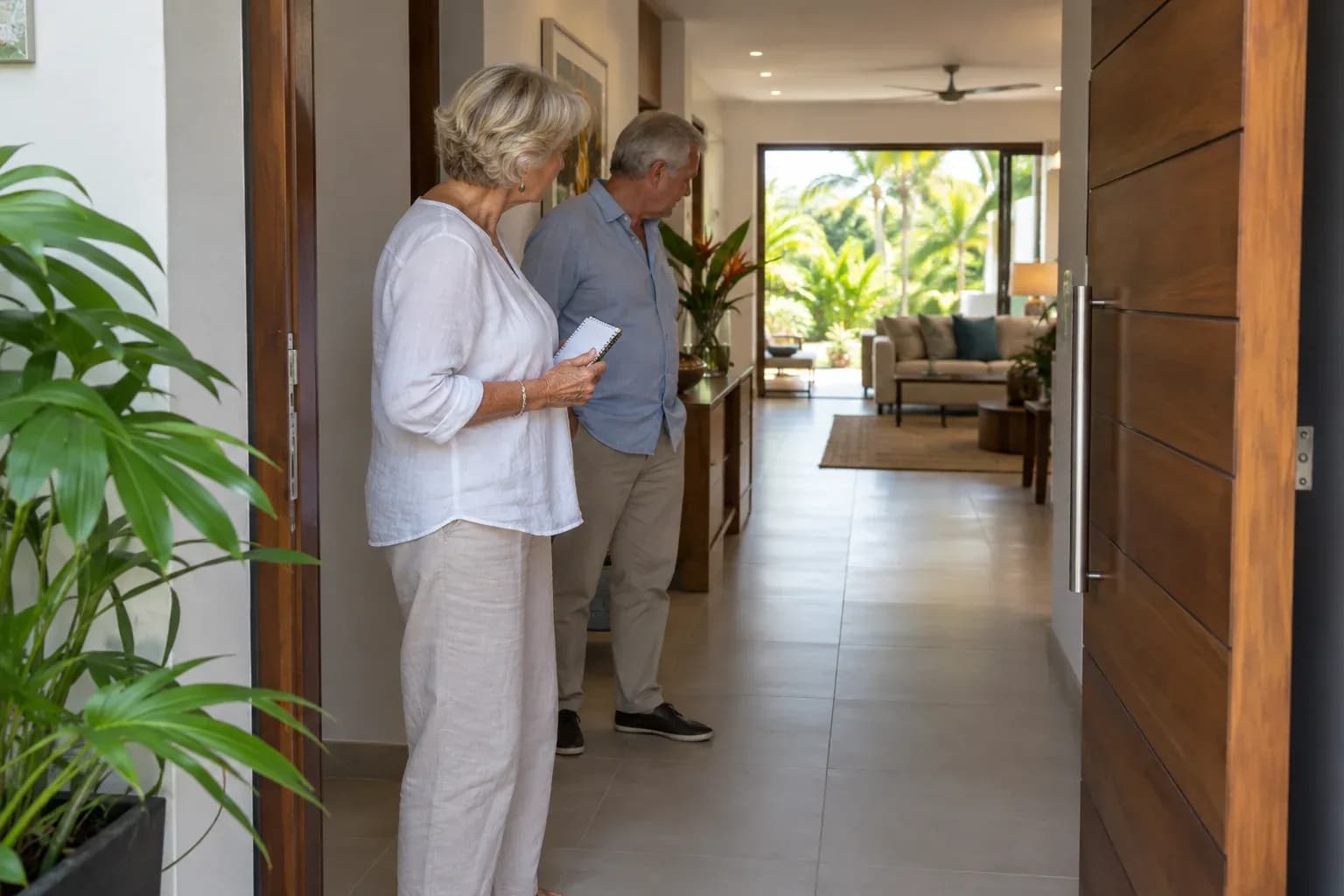

Saturday at the beach says little about Tuesday afternoon. For a family considering a move to Mauritius, that distinction matters. A home also has to accommodate homework, a work call and a child looking for somewhere quiet. Holidays show what a family enjoys doing together. An ordinary week reveals the room each person needs.
A trial stay before buying creates time to live somewhere rather than move from one property viewing to the next. The pool is still appealing. But a place for school bags, the journey home and a door that can be closed start to matter differently.
This need not become a week of tests. A few mornings without an excursion and several evenings at home can change the way an address feels.
Whose morning is it?
Members of a family can look at the same property and picture quite different days. One sees a desk facing the garden. Another is thinking about departure time, children, shopping and getting back before a meeting. If those pictures meet only after moving in, an attractive home may become the setting for an exhausting arrangement.
Journeys deserve to be experienced by the people making them. A map estimate helps with planning, but may leave out waiting, parking and the walk to the entrance. The return matters too, particularly when children finish at different times.
A school place before an address
A house near a school you like is tempting. First, there is a conversation to have about admission and the right class. Mauritius's Ministry of Education says transfers to state secondary schools depend on vacancies; for private secondary transfers, it directs families to the school manager. A family arriving from abroad also needs to establish which admission procedure applies to it.
Living a few streets away therefore answers little about the available class, teaching language or support. That relationship has to develop directly with the school, alongside the property search.
Timing changes the picture as well. The Ministry publishes primary and secondary term dates. A happy week during the holidays is not necessarily representative of term time, and the chosen school's dates need their own confirmation. Neither a quiet road nor an easy morning during a break should quietly become the assumed weekday routine.
When everyone comes home
In the afternoon, the same rooms have other jobs. The sitting-room table becomes a desk, then a homework space, then somewhere everyone wants to eat. Some families enjoy that overlap. For others, it creates friction. A bedroom count cannot explain all of it.
A quiet space need not be large. It might be a small room for calls, storage that saves clearing everything away at each meal, or a door between play and rest. These details become clearer when the family spends time in the property at the hours it expects to use it.
Children notice different things. A familiar corner, a reassuring journey or being able to find their possessions may mean more than the view. Their observations belong in the discussion without making them responsible for the adults' financial decision.
Nor should every gap in the timetable silently become one adult's responsibility. The arrangement needs room for work to run late, for somebody to be tired and for plans to change. A pleasant address can feel quite different when its daily logistics depend on one person never being unavailable.
A short stay cannot reproduce everything. School places, friendships and trusted support take time to establish. Some uncertainty will remain. What the stay can reveal is whether the proposed routine has room to work.
After the viewings, leave an evening free to compare notes: the room that was missing, the awkward journey, and what felt easy. Those details give the next round of house hunting something specific to work with.