A large window can easily win you over during a viewing. It opens up the room to the garden and makes you picture a sofa beside it. But the light that looks good in a photograph is not necessarily the light you want for reading, cooking or working. When choosing a home in Mauritius, it is worth looking at the windows from inside the rooms, too.
The questions become more useful when you imagine everyday life there. Where would the sofa go? What time would you have breakfast? A window that feels pleasant during a viewing may look quite different later in the day. Returning at another time lets you compare those moments, though it cannot tell you what to expect throughout the year.
The view from the sofa
Daylight is not just sunlight streaming through glass. A room can receive diffuse light without any direct sun falling on the floor. The Australian public guide YourHome distinguishes between the two and highlights the glare that direct sunlight can cause on polished surfaces, such as a kitchen worktop or desk.
For a buyer, that is a reason to move beyond the middle of the room. Sit where you would like to read, look out from the spot where your desk might go, or stand at the kitchen worktop. Reflections on a surface and the brightness of a window are not things you can fully judge from the doorway.
With the occupants' permission, switching off the lights can also help you see how much light comes through the windows. The aim is not to find a home that never needs artificial lighting. It is to understand where daylight will be useful in the daily routine you have in mind.
What casts shade on the window?
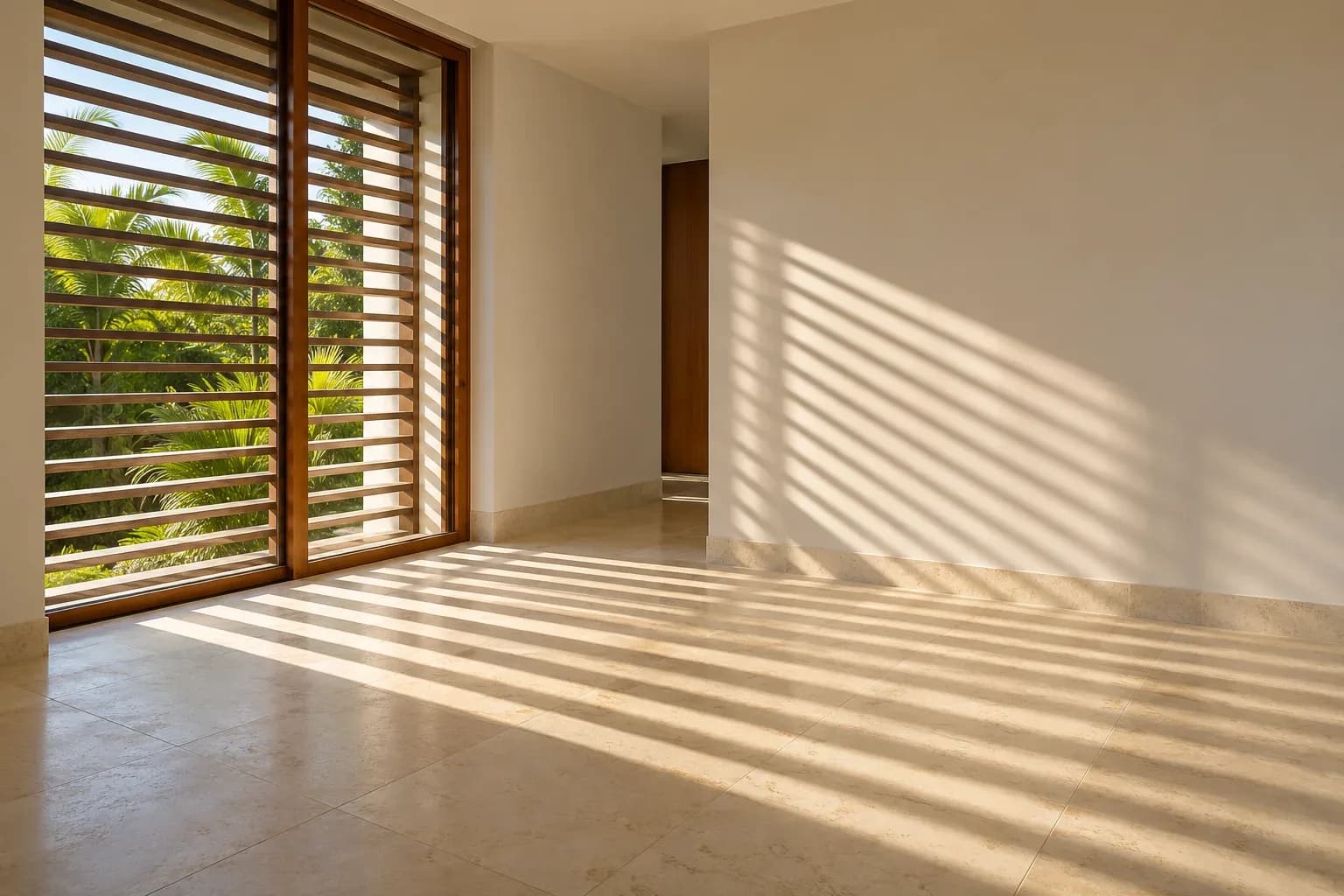
A roof overhang, a louvred screen or an external blind changes how sunlight reaches a window. In its guidance for commercial buildings, Mauritius's Energy Efficiency Management Office distinguishes between fixed and adjustable shading, taking account of the sun's position, glare and the daylight that should be retained. These principles offer useful ways to look at a home; they are not presented here as requirements for every house.
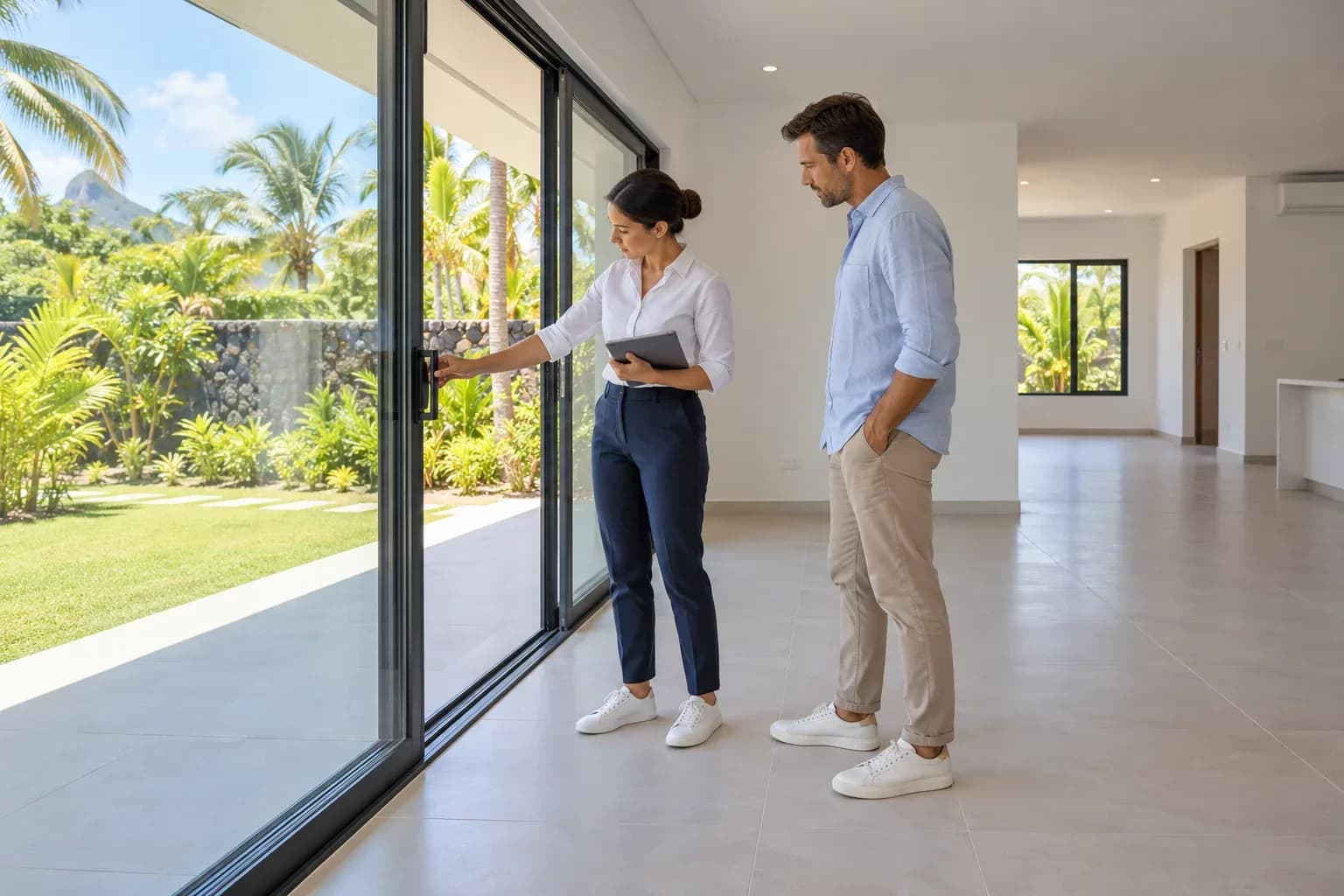
During a viewing, look at the edge of the shadow on the window and see what is casting it. Can an adjustable screen or blind help you control the light? Does it have to be fully closed before the room feels comfortable to use? Asking for a demonstration tells you more than simply spotting a blind in a photograph.
An indoor curtain and an external shade sit on different sides of the glass. Before relying on alterations, ask an architect to assess the windows and the options available. The size of a window alone tells you neither how a room is lit nor how comfortable it will feel.
The kitchen at breakfast time
Recording the time, weather and position of the blinds makes your impressions easier to compare. An overcast viewing with all the shades open is not the same as a sunny visit with the blinds down. Photographs taken with permission can be useful reminders, but their brightness also depends on the camera settings.
The direction the windows face adds another piece of information. It is not enough to rank every home in Mauritius by preference: shading, nearby obstructions and the way each room will be used also matter. If daylight is important to your choice, you can discuss a sun-path and shading study with a professional.
A second viewing can then focus on the kitchen at the time you expect to use it, or the reading corner towards the end of the day. You will have a clearer idea of where to put the table or armchair, and perhaps which home to choose.