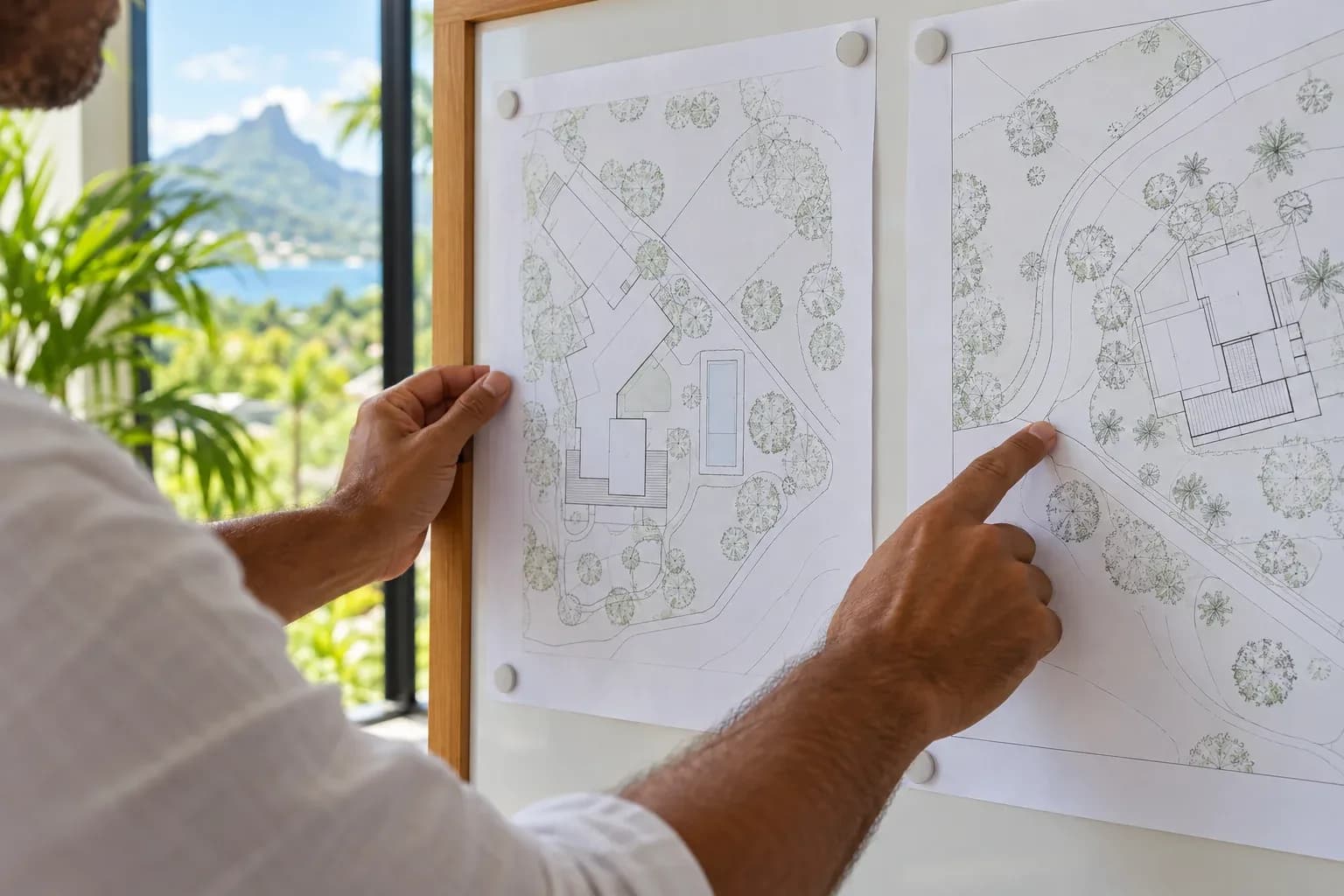

The first drawing already contains a furnished sitting room. The light seems chosen for that space and the terrace is ready for guests. Buying off-plan often begins with this projection. The actual home comes later, through decisions, alterations and questions less visible in the picture.
In Mauritius, the route from drawing to keys benefits from a continuing record. It is not about following every day on site. It is about finding what was agreed when the kitchen, windows and rooms begin to take their physical places.
The drawing that was agreed
A show apartment helps people imagine living there. The specification and contract annexes identify what is actually being bought. A displayed finish may be included, optional or absent from the selected unit.
Dated versions help avoid relying on a remembered conversation. If a socket position or cupboard changes, the applicable document and method of recording agreement need to be clear. Earlier versions remain useful in explaining what changed.
The legal form of sale is another conversation. EDB's PDS guidelines discuss VEFA and vente à terme within their particular framework. They do not establish identical conditions for every off-plan offer. The notary must explain the contract and the scope of any stated guarantees for the actual purchase.
Those explanations belong before a payment decision. A practical viewing list does not itself create a right to withhold money or change a contractual date.
Finished rooms within unfinished surroundings
Construction photographs can be encouraging. They still need to identify the building and apartment concerned. Work elsewhere in the development may say little about progress on this particular home.
Access and shared facilities may follow a different timetable from interior finishes. An apartment can look ready while a route, lift or service remains outstanding. What will operate at arrival needs an answer tied to the agreement, with temporary arrangements described separately.
Electricity has its own process too. The CEB describes an application procedure for residential supply. Installed appliances alone do not establish that the property's account and supply are ready. The developer and provider can explain what remains to be arranged.
A different kind of viewing
At handover, the rooms are no longer only places to imagine furniture. Attention turns to a handle, a door or an included appliance and how it works. An independent technical examination can supplement that visit where appropriate.
Specific observations are easier to follow later: the room, the item and an authorised photograph. When an intervention is described as complete, the original point can be found again. Technical performance and compliance remain matters for qualified specialists.
A handover document can have legal consequences. How unresolved points are recorded needs explaining before signature. Manuals, maintenance contacts, keys and access devices then join the file. The original drawing remains, but now accompanies rooms whose practical details are becoming familiar.