A quiet bedroom and one with a persistent hum can look equally appealing in photographs. The bed, curtains and window may be much the same. It takes time in the room to discover what the picture leaves out.
During a property search in Mauritius, quiet often enters the conversation as an adjective: a peaceful neighbourhood, a tranquil bedroom. People bring different expectations to those words. Someone sleeping after a night shift, someone making work calls and someone who prefers open windows may want quite different things from the same room.
A few minutes without the tour
A viewing rarely encourages sitting still. There is a living room to see, a garden and another bedroom. Spending a few minutes in one place nevertheless allows the sounds around a home to become noticeable: passing cars, equipment starting up or a steady noise whose source is unclear.
These are possible situations, rather than observations about a particular address. With the occupants' permission, it is worth leaving time to listen where you expect to sleep or work.
Closing the window may change the impression. Whether that works for you depends on how you intend to live. A room that feels comfortable only with every opening shut may be less appealing to somebody hoping to enjoy the outside air. The comparison is partly about habits, as well as the building.
Returning at another time can add a different impression. It cannot promise the same soundscape on every future day, but it gives the conversation more to work with than a hurried first visit.
The reading on a phone
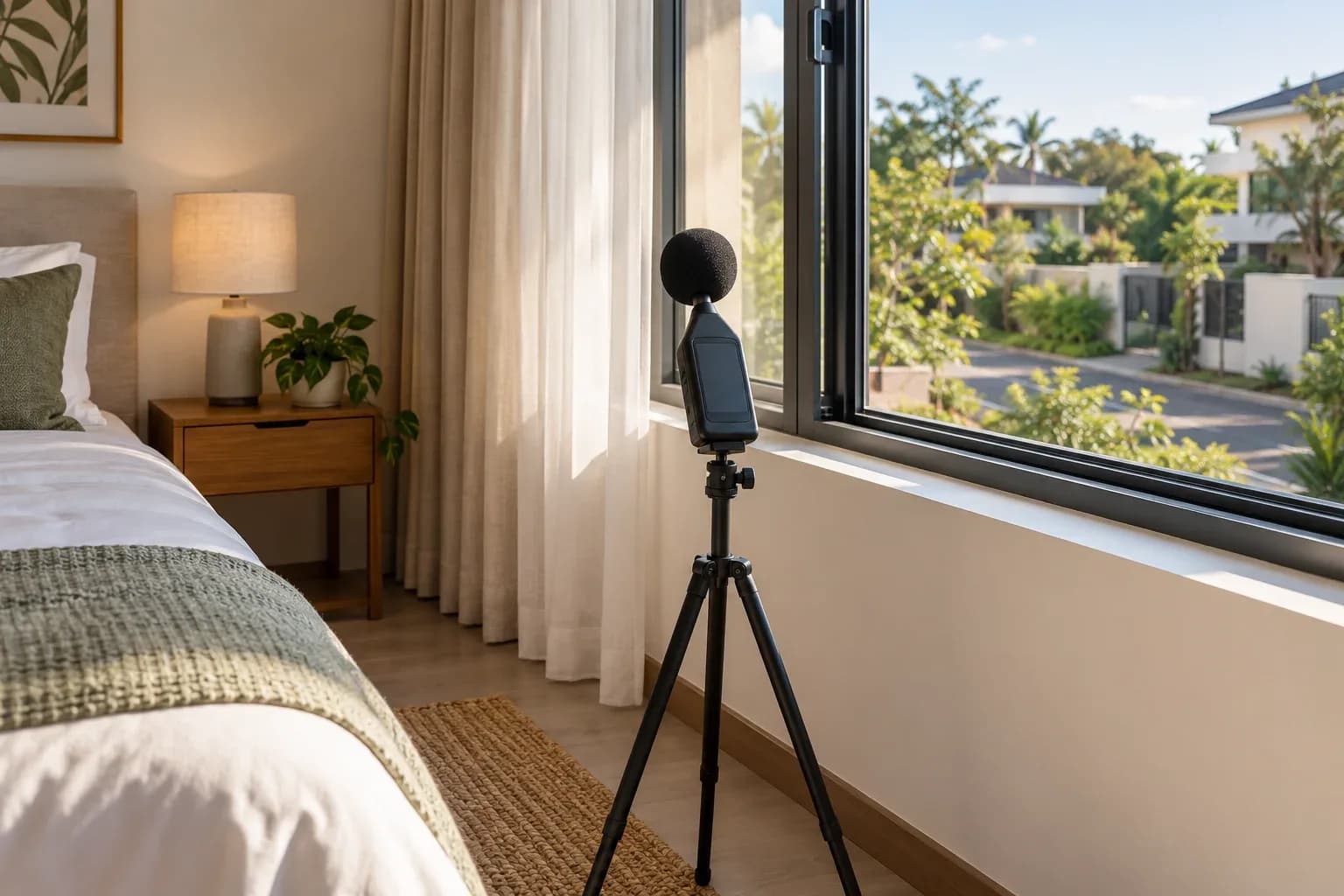
An app quickly produces a decibel value. A number can feel more reassuring than a personal impression. Yet an average, a maximum and a peak are different readings. NIOSH's documentation distinguishes them and sets out the conditions used to test its own app.
That material concerns workplace noise. It does not turn every phone into an instrument for assessing a Mauritius home. A screenshot without the room, duration or app name may make the discussion more confusing.
A plain description can be a better start: a steady hum in the rear bedroom during the viewing, with the window open. It leaves room to ask where the sound comes from without blaming a neighbour or identifying a machine on guesswork.
When the sound affects the purchase
If a sound could make you reject a property, another visit or an acoustic assessment deserves consideration before committing. A specialist needs to know which room matters and how you expect to use it. The proposed investigation can then address that question.
Mauritius's published 2022 noise regulations distinguish several categories and set conditions for official measurement, including equipment calibration. A viewing impression does not establish an offence. The relevant authority must confirm the applicable procedure for a legal assessment.
For a buyer, the immediate concern remains practical: will this room work for the life planned for it? A seller can explain equipment, an agent can arrange a return visit and a specialist can assess a concern. Each conversation starts more usefully with what was actually heard than with an assurance of permanent silence.