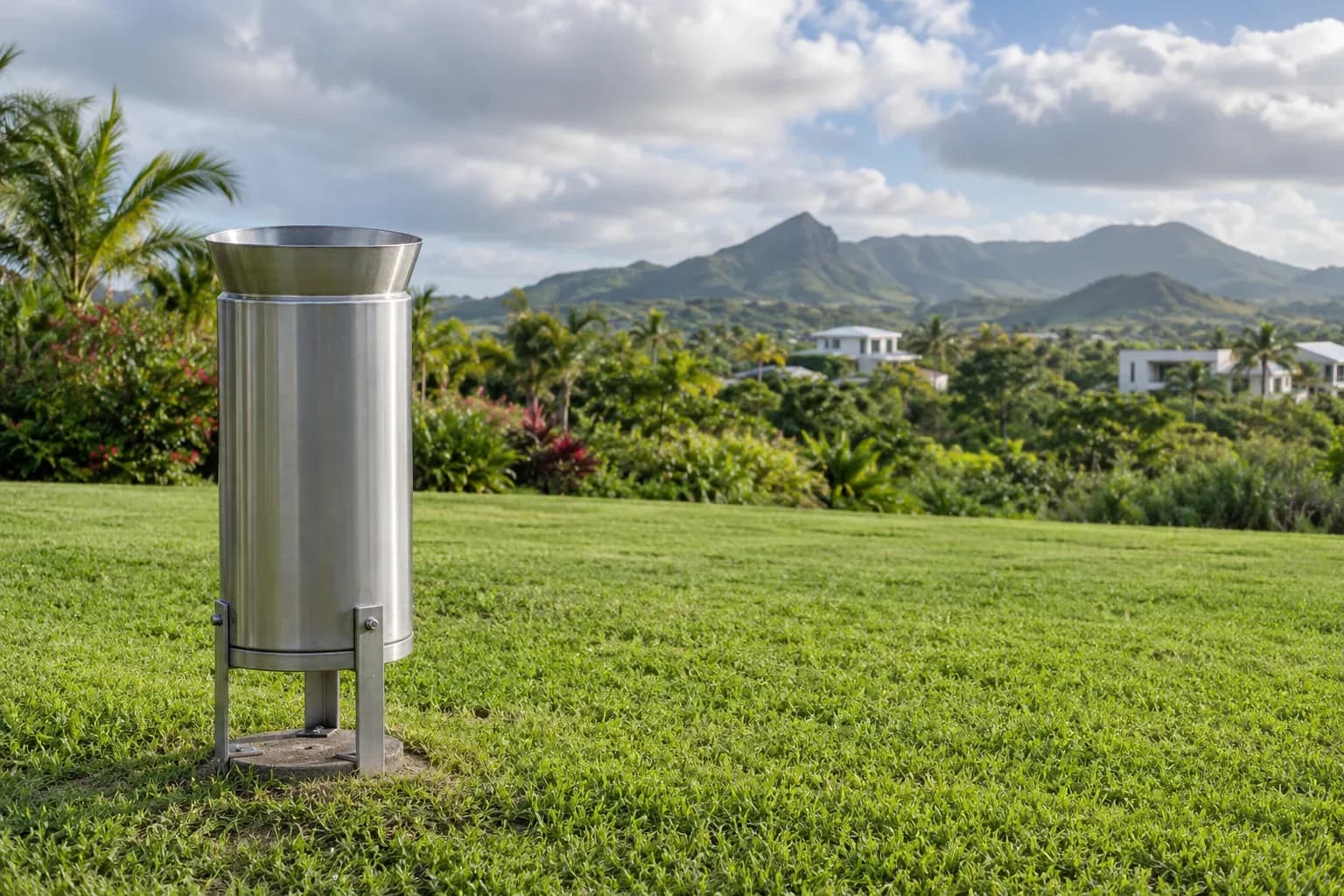
One shower during a viewing can dampen enthusiasm for a house. Lunch in sunshine can have the opposite effect, making it tempting to imagine every day like that. When choosing where to live in Mauritius, the weather on the day easily becomes part of the decision.
Climate records offer some distance from that first impression. They cover years in one place, whereas a viewing gives you a few hours. Their value becomes clearer alongside a particular way of living: time outdoors with children, a garden to look after or a terrace intended for evening meals.
The name behind the region
Mauritius Meteorological Services bases its regional climate sheets on representative stations. The Centre sheet, for example, names Vacoas. Keeping that name with the figures makes the record more useful in a property search.
A station is a more concrete starting point than an advertising promise about sunshine. It does not measure the garden of the house being viewed. Finding both places on a map helps locate them, but proximity alone does not make two addresses equivalent.
That leaves room for a stay and conversations with the occupants. How do they use the outdoor space? Which room do they prefer at different times? Their answers are experiences worth hearing, rather than statistics to apply to an entire region.
The questions can stay ordinary. There is no need to ask a seller for a verdict on the island's climate when what you want to understand is how this particular home is used.
A rainy day need not mean all day
Millimetres and a count of rainy days describe different things. The Centre sheet includes both, with thresholds for counting days. A rainfall total does not, on its own, tell you when the rain fell or how long the showers lasted.
That distinction matters to a family reading a day count and imagining the same number of days shut indoors. It also matters to anyone treating a low total as a promise of dry late afternoons. The table cannot reserve a slot for a walk.
The years above the columns deserve attention too. Some available sheets are historical: Vacoas uses a 1971–2000 reference for several averages. Comparing regions is easier when the years and measures match.
The months you will actually spend here
Climate normals provide a long-term reference. The World Meteorological Organization defines standard normals over thirty-year periods. They help describe usual conditions, rather than replacing the forecast for a particular stay.
The month you plan to be here therefore deserves more attention than a single annual average. A home used for certain holidays raises different questions from one occupied all year. Each household brings its own calendar to the search.
Returning at another time of year can add to the first visit without settling every uncertainty. It offers another chance to spend time in the rooms, use the paths and look at the outdoor spaces.
When reviewing the shortlist, keep the records beside the photographs. A sheltered terrace, its connection to the kitchen and how much you expect to use it still belong in the viewing conversation. The figures provide context; the decision concerns the house in front of you.